Mold Removal in West Woods, CO
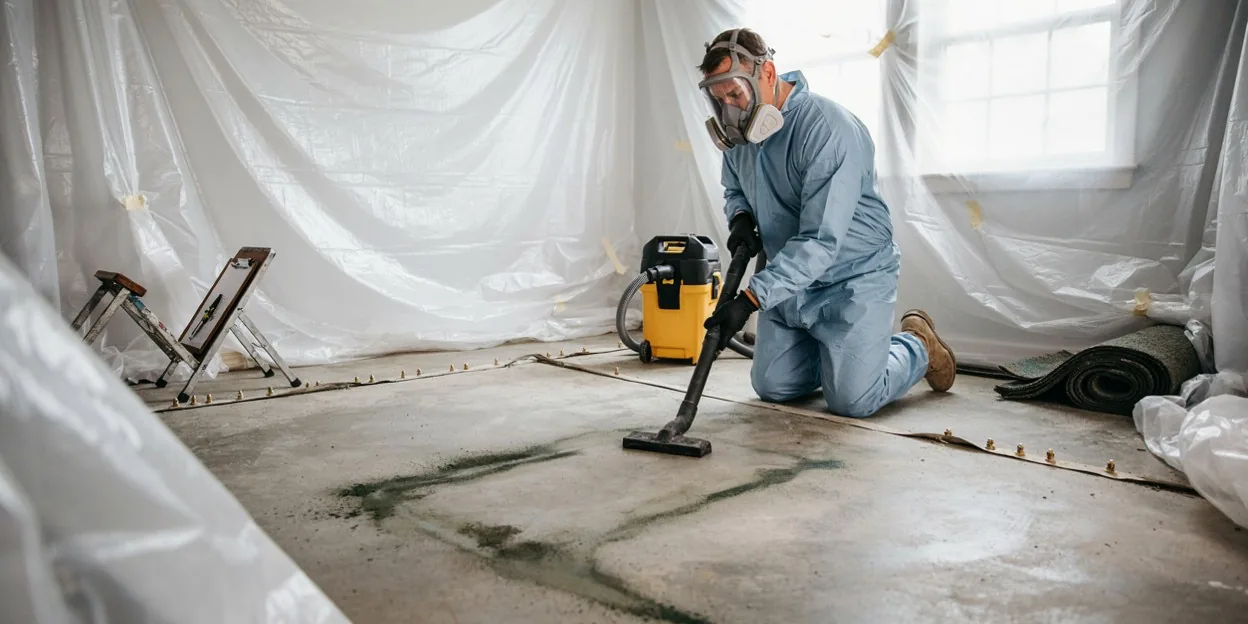
West Woods is the golf-course neighborhood in west Arvada around 64th to 72nd avenues and Quaker Street, built mostly in the 1990s and early 2000s as two-story and ranch homes with full basements around the fairways. The Meadows at West Woods, Spring Mesa, and West Woods Ranch filled in around the course, and most of the houses were finished below grade by their second or third owner.
Golf-course lots mean irrigated turf running right up to the foundation on one side, and a sprinkler head that sprays the house or a drainage swale that silts in puts water against a basement wall all summer. The 1990s houses are also at the age where water heaters, supply lines, and sump pumps are on their second or third replacement.
Homeowners in West Woods reach an independent local mold provider through this site's phone line. The provider reads the walls with a meter and tells you what the house needs; our part is the phone call.
West Woods mold removal in a 1996 two-story on a fairway lot
A basement wall facing the course that stays damp all summer is mold removal. A water heater that let go in a finished basement is whole-home mold remediation. The lower level that smells on August evenings is mold odor removal.
Twenty-seven holes the city waters, and the restrictions that come with them
West Woods Golf Club is a City of Arvada course on Quaker Street with three nine-hole layouts, the Sleeping Indian, the Cottonwood, and the Silo, and it follows the same city watering restrictions that the surrounding houses do.
Call (720) 823-6943 and tell us what you see. We put you through to a local mold provider serving West Woods.
Services Available in West Woods
Mold Removal
Growth on a finished basement wall, behind a laundry room, or under a window well leak: room sealed, wet board cut to the meter line, framing HEPA-cleaned and dried.
Black Mold Removal
A dark patch on basement drywall or a bathroom ceiling handled by how far the water traveled, not its color: containment, porous material out, source fixed first.
Whole-Home Mold Remediation
A sump pump that quit during the melt or a supply line that ran for weeks, mapped floor by floor and cleared in zones as one project.
HVAC Mold Cleaning
Furnace cabinet, coil, humidifier pad, and return ducts cleaned when a basement air handler or a swamp cooler has been pushing damp air through the house.
Bathroom Mold Removal
Growth behind a vanity, under a shower pan, or on a ceiling with no fan, removed once the drain, supply line, or venting problem is fixed.
Attic Mold Remediation
Dark streaks on roof sheathing after hail, an ice dam, or a bath fan venting into the attic, cleaned and treated once the roof and the venting are corrected.
Mold Odor Removal
A musty basement in a house that looks fine, traced to wet carpet pad, a damp wall cavity, or a crawl space, then removed and treated at the source.
Mold Damage Repair
Drywall, insulation, baseboard, and carpet pad put back after removal, once the wall reads dry and the crack or leak that started it is repaired.